Brasstown Bald
Site History
The Story of Brasstown Bald
Long before there was a visitor center, shuttle, paved summit trail, or observation deck, Brasstown Bald stood as a landmark in the North Georgia mountains. At 4,784 feet, it is the highest point in Georgia and part of the southern Blue Ridge Mountains.
Today, visitors come for the panoramic views, but the mountain’s story reaches beyond the summit. It includes Cherokee history, the origins of the Brasstown name, the conservation of North Georgia’s forests, and the development of the mountain into the public destination visitors experience today.
A Mountain Above North Georgia
Brasstown Bald is a broad, rounded summit rather than a sharp mountain peak. As visitors travel upward, the forest, temperature, wind, and weather can change noticeably from the valleys below.
From the summit observation area, visitors can enjoy a 360-degree view of the surrounding Blue Ridge Mountains. On clear days, the view may extend across Georgia, Tennessee, North Carolina, and South Carolina.
The mountain’s elevation and wide view have made it an important landmark for generations, first as part of a much older cultural landscape and later as a place for forest protection, education, and public recreation.
Cherokee Homelands and the Brasstown Name
Long before roads, towers, and visitor facilities reached the summit, a variety of tribes and peoples walked these ridges. The Cherokee are remembered for settling in the foothills, and their presence still echoes today in local place names such as Hiawassee, which comes from the Cherokee word Ayuhwasi, meaning “meadow” or “grassy place.”
Though it is called Brasstown Bald today, the name comes from a misunderstanding. The Cherokee word Itse’yi, meaning “place of fresh green,” was confused with the Cherokee word Untsaiyi, meaning “brass,” which eventually led to the name we use today. The word “bald” refers to the mountain’s open, grassy summit.
From Changing Forests to Protected Public Land
During the nineteenth and early twentieth centuries, settlement, farming, road construction, logging, mining, and other development changed forests and waterways throughout the North Georgia mountains.
The Weeks Act of 1911 allowed the federal government to purchase forestland in the eastern United States for watershed protection and conservation. Over time, these efforts helped establish the Chattahoochee National Forest and protect much of the landscape surrounding Brasstown Bald as public land.
Forest restoration, fire protection, and responsible land management gradually helped shape the national forest visitors experience today.
From Summit Lookout to Visitor Destination
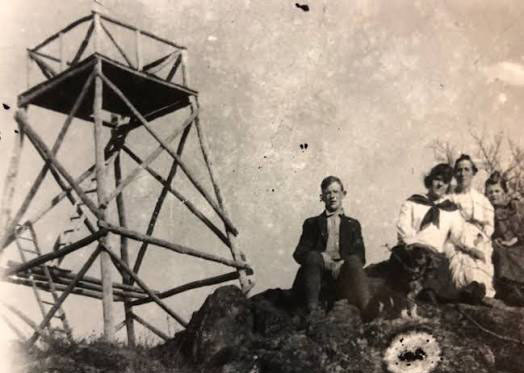
Brasstown Bald’s wide view once made the summit an important place for detecting wildfires and watching over the surrounding forest. Over the years, several lookout structures stood near the summit, including early wooden towers, a stone lookout, and later metal towers. From these high vantage points, fire watchers could scan the surrounding mountains for smoke and help alert crews when a wildfire was spotted.
As forest management changed, the summit gradually developed from a working lookout into a destination for recreation, education, and scenic viewing. New visitor facilities made it possible for more people to experience the mountain and learn about the surrounding landscape.
Today, visitors can hike the steep 0.6-mile Summit Trail or take the seasonal shuttle to the top. The summit area includes an observation deck, natural history exhibits, a mountaintop theater, picnic areas, and connections to nearby trails.
These facilities allow visitors to enjoy Georgia’s highest point while learning more about the mountain’s natural environment, cultural history, and public-land legacy.
Caring for Brasstown Bald Today
Brasstown Bald is part of the Chattahoochee-Oconee National Forest and is operated by FIND Outdoors in partnership with the U.S. Forest Service.
Today, this partnership supports visitor services, educational programs, exhibits, trails, recreation access, and stewardship of the summit environment. This effort helps visitors connect with the mountain while protecting it for future generations.
Every visitor becomes part of the mountain’s continuing story. Staying on designated trails, respecting wildlife, leaving natural and cultural features undisturbed, and following posted guidance all help care for Brasstown Bald. The view from the summit may feel timeless, but its future depends on continued stewardship.
→ Explore the Chattahoochee-Oconee National Forest
→ Learn More About FIND Outdoors
→ Learn About Georgia Cherokee History