
Carters Lake
Water Safety & Title 36 CFR Rules & Regulations
Enjoy Carters Lake Safely
Swimming, boating, paddling, fishing, and spending time along the shoreline are some of the most popular ways to enjoy Carters Lake. The lake is also a natural water environment with changing depths, weather, currents, submerged hazards, boat traffic, and areas near Carters Dam that require additional caution.
Visitors should plan ahead, know their limits, follow posted warnings, and understand the rules that apply before entering or traveling on the water.
Water safety is everyone’s responsibility. Taking a few precautions before your trip can help protect you, your family, and others enjoying the lake.
Carters Lake Water Safety Guidelines
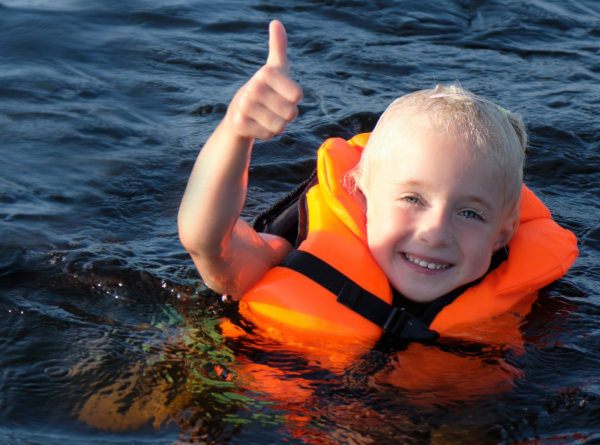
The U.S. Army Corps of Engineers provides the following water-safety guidance for visitors to Carters Lake:
- Always wear an approved life jacket. Choose a properly fitting U.S. Coast Guard-approved life jacket appropriate for your activity.
- Know and obey all boating laws. Boat operators are responsible for understanding applicable federal, Georgia, and local boating requirements.
- Comply with all warning signs around locks, dams, and restricted areas. Do not enter areas marked as closed, hazardous, or restricted.
- Be alert to underwater hazards. Submerged stumps, logs, rocks, fences, and other objects may be present beneath the surface.
- Use caution when approaching the shoreline. Water depth can vary from place to place and may change as lake levels rise or fall.
- File a trip plan with someone you trust. Let them know where you are going, who is with you, and when you expect to return.
- Do not overload your boat. Stay within the vessel’s approved passenger and weight capacity.
- Always swim in designated swimming areas. These areas help separate swimmers from boat traffic and other hazards.
- Never dive into water of unknown depth. Rocks, submerged objects, and changing water levels may create hazards below the surface.
- Keep children under close supervision at all times. Never assume another person is watching a child near the water.
- Do not use alcohol while in, on, or around the water. Alcohol can affect judgment, coordination, reaction time, and the ability to respond in an emergency.
Life Jackets Save Lives
Wearing a life jacket is one of the most important steps visitors can take around the water.
Boaters and paddlers should have an appropriate U.S. Coast Guard-approved life jacket for every person aboard and should wear it while on the water. Georgia law also includes specific life-jacket requirements based on age, vessel type, and activity.
Children under age 13 are required by Georgia law to wear an appropriately sized life jacket while aboard a moving vessel unless they are inside a fully enclosed cabin.
Kayakers, canoeists, paddleboarders, anglers, and experienced swimmers can encounter unexpected conditions just as quickly as other visitors. A life jacket is most effective when it is already being worn before an emergency occurs.
Swimming Safety
Visitors should swim only in designated swimming areas and remain aware that natural lake conditions can differ from a swimming pool.
Swimming, wading, and other water activities are at the visitor’s own risk. Never dive into water when the depth or underwater conditions are unknown.
Parents and guardians should remain actively focused on children near the water. Young or inexperienced swimmers should remain within close reach of a responsible adult.
Avoid swimming near boat ramps, docks, mooring areas, or other locations where vessels enter and leave the water. Title 36 regulations prohibit swimming in certain areas such as launching sites, designated mooring points, and public docks.
Harris Branch Beach
Harris Branch Beach provides a designated seasonal swimming area for day-use visitors.
There are no lifeguards on duty, so visitors swim at their own risk. Children should remain under close supervision, and swimmers should stay within designated areas and choose activities appropriate for their abilities.
Pets are not permitted on the beach or within the designated swimming area.
Leave the water if thunder, lightning, strong winds, poor visibility, or other unsafe conditions develop.
Boating & Paddling Safety
Carters Lake provides access for powerboats, kayaks, canoes, paddleboards, and other permitted watercraft.
Before launching:
- Make sure your vessel is in safe operating condition
- Carry all equipment required by Georgia boating law
- Provide an approved life jacket for each person
- Confirm that your vessel is not overloaded
- Check the weather and current lake conditions
- Review the status of the boat ramp you plan to use
- Tell someone where you are going and when you expect to return
- Carry a phone or another reliable means of communication when possible
Boat operators should remain alert for swimmers, paddlers, other vessels, floating debris, and changing water depths.
Georgia boating laws remain in effect on Carters Lake. Vessel operators should review current Georgia Department of Natural Resources boating requirements before launching.
Underwater Hazards & Changing Lake Levels
Carters Lake is a deep reservoir with a rugged underwater landscape.
Submerged stumps, logs, rocks, fences, and other objects may be present beneath or near the surface. These hazards can become more noticeable as lake levels change.
Use extra caution when boating near shorelines, coves, unfamiliar areas, or locations where the water level is unusually high or low.
The U.S. Army Corps of Engineers notes that hazardous boating conditions may occur when lake levels reach the upper or lower operational ranges of boat ramps. Floating debris and submerged objects can also create hazards.
Visitors should check current boat-ramp conditions before launching.
→ Check Carters Lake Boat Ramp Status
Carters Dam & Restricted Areas
Water near dams can be especially hazardous. Turbulent water, rapidly changing conditions, strong currents, and restricted operating areas may exist immediately above or below Carters Dam.
Visitors must obey warning signs, buoys, barriers, and other posted restrictions. Never enter an area marked as closed or restricted, and do not attach or anchor a vessel to dams, buoys, or other restricted structures unless specifically authorized.
Extra caution should also be used when fishing or recreating near areas affected by dam operations.
Alcohol & Water Recreation
Carters Lake water-safety guidance advises visitors not to use alcohol while in, on, or around the water.
Alcohol can reduce balance, coordination, judgment, swimming ability, and reaction time. These effects can become more dangerous when combined with sun, heat, cold water, waves, or boating activity.
Operating a vessel while under the influence of alcohol or drugs is also prohibited under Georgia law.
Choose a sober boat operator and save alcohol for a time when you are safely away from water recreation.
Fishing Safely
Fishing from a boat or shoreline still requires awareness of changing lake conditions.
Anglers should wear a life jacket when boating and use extra caution along steep or slippery shorelines. Remain aware of weather, changing water levels, boat traffic, and submerged hazards.
Fishing is not permitted within designated swimming areas, on boat ramps, or in other areas where fishing is specifically prohibited.
Anyone fishing at Carters Lake should also follow current Georgia fishing regulations and licensing requirements.
Weather & Water Conditions
Weather can change quickly around Carters Lake.
Thunderstorms, lightning, wind, fog, heavy rain, and rapidly changing conditions can make swimming and boating unsafe.
Before heading onto the water, check the current forecast. Continue watching the sky and conditions throughout your visit rather than relying only on the forecast you checked earlier in the day.
If thunder is heard or lightning is visible, leave the water and seek a safe location.
What Is Title 36 CFR?
Carters Lake is a U.S. Army Corps of Engineers water-resource project. Public use of Corps-managed lands and waters is governed by Title 36 of the Code of Federal Regulations, Chapter III, Part 327.
These federal regulations establish rules for the safe and responsible use of U.S. Army Corps of Engineers recreation areas and public lands.
Title 36, Part 327 covers topics including:
- Vehicles and parking
- Boats and other watercraft
- Swimming and water recreation
- Camping
- Picnicking
- Fishing, hunting, and trapping
- Fires
- Pets and other animals
- Sanitation and waste disposal
- Public property and natural resources
- Commercial activities and special events
- Recreation fees
- Restricted or closed areas
These regulations apply throughout U.S. Army Corps of Engineers water-resource projects, including Carters Lake. Applicable federal, Georgia, and local laws also remain in effect.
Visitors are responsible for following posted signs, ranger instructions, site-specific rules, and all applicable laws while using Carters Lake recreation areas.
→ View Title 36 CFR Part 327 Rules & Regulations
Important Title 36 Water-Recreation Rules
Visitors should be especially aware of several Title 36 requirements when recreating around Carters Lake:
Swimming: Swimming, wading, snorkeling, and scuba diving are permitted at the visitor’s own risk except in prohibited locations. Swimming is not permitted at launching sites, designated mooring points, public docks, or other areas specifically closed to swimming.
Boats and Watercraft: Watercraft must follow posted restrictions, buoys, and applicable federal, state, and local laws. Boats may not enter prohibited or restricted areas.
Fishing: Fishing is generally permitted but is prohibited in swimming areas, on boat ramps, and in other locations designated as closed.
Pets: Pets within developed recreation areas must be properly restrained. Pets are prohibited on designated swimming beaches and in certain other facilities unless they are qualifying service animals.
Restricted Areas: Visitors must obey all posted closures, barriers, signs, buoys, and other restrictions established for safety or resource protection.
Title 36 contains additional requirements beyond those summarized here. Visitors should review the full regulations when they have questions about an activity or site rule.
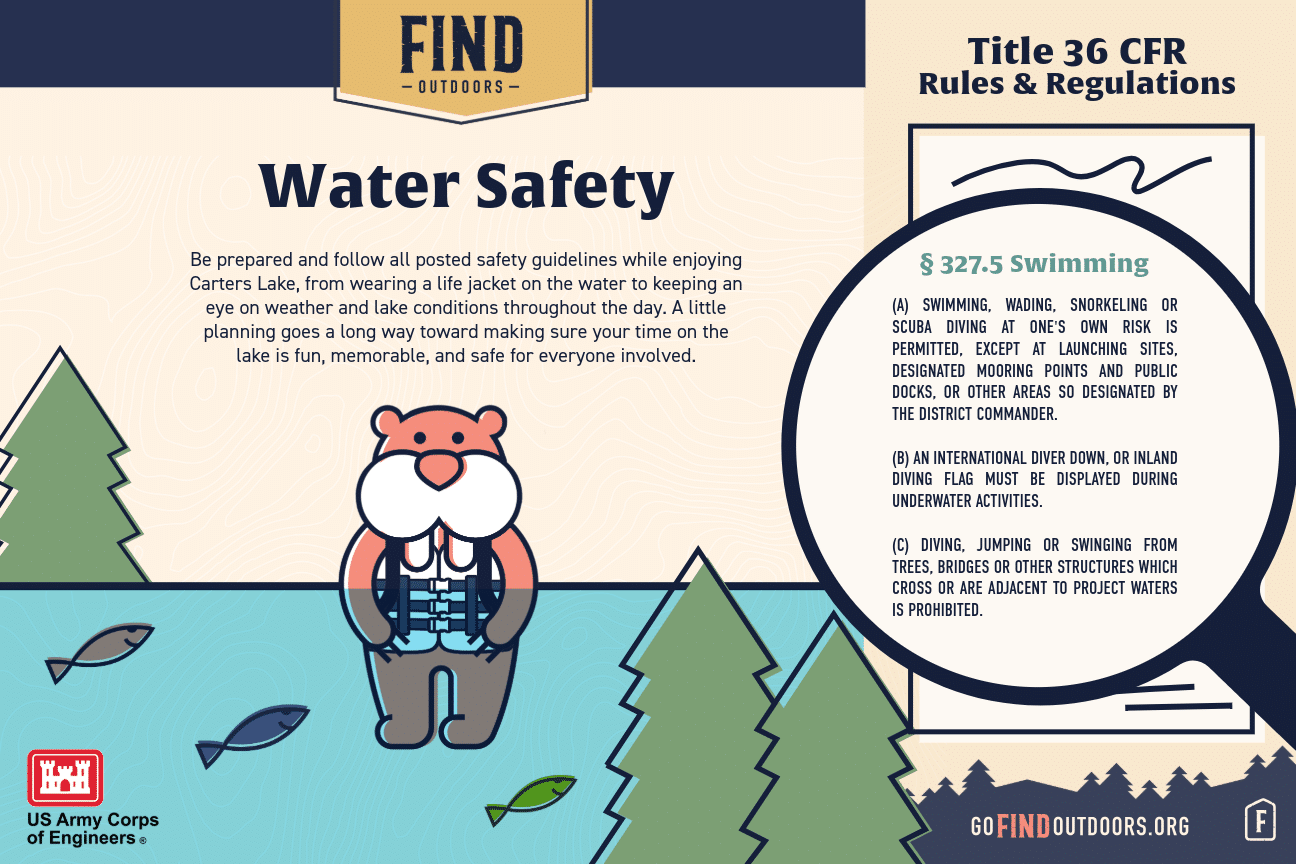
Before swimming, boating, paddling, or fishing:
- Check the current weather and lake conditions
- Check the operating status of your boat ramp
- Wear an appropriate life jacket
- Make sure children are closely supervised
- Swim only in designated areas
- Never dive into unknown water
- Watch for submerged and floating hazards
- Know your vessel’s capacity and never overload it
- Follow warning signs, buoys, and restricted areas
- Avoid alcohol while participating in water recreation
- Share your trip plan with someone before leaving
- Carry a reliable means of communication when possible
- Follow Georgia boating laws and Title 36 regulations
Conditions can change after you arrive. When in doubt, choose the safer option and wait for better conditions before entering the water.
→ View Carters Lake Boating & Water Safety Information
→ Check Carters Lake Boat Ramp Status
→ Review Georgia Boating Rules & Regulations
→ View Title 36 CFR Part 327 Rules & Regulations
→ View Current Weather
→ View Frequently Asked Question